What’s Happening and How to Protect Your Family
If you’ve bought eggs from a US grocery store in the last few weeks, you’ve probably seen the headlines. A salmonella outbreak linked to eggs is currently under investigation by the CDC and FDA, and it’s already sickened nearly 100 people across 17 states. For expats settling into life in the US, this kind of news can be confusing — recalls, “sell by” dates, and unfamiliar grocery brands aren’t always intuitive if you’ve just moved from somewhere else. This guide breaks down exactly what’s going on, in plain language, and what you should actually do about it.
Quick Answer
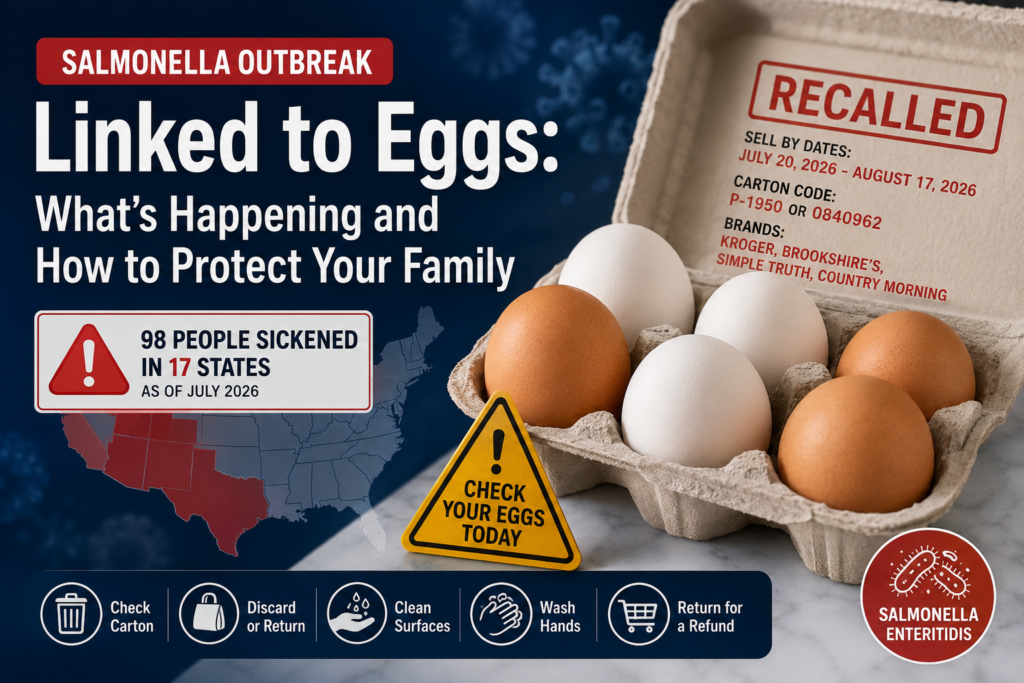
A multistate outbreak of Salmonella Enteritidis has been traced to shell eggs produced by Midwest Poultry Services, L.P. in Texas. As of late July 2026, 98 people across 17 states have been infected, with 26 hospitalizations and no deaths reported. The company recalled 1,589,577 dozen shell eggs — more than 19 million individual eggs — on July 22, 2026. If you have eggs matching the recalled brands and dates in your fridge, throw them out or return them immediately.
What Happened: The Outbreak Timeline
People started falling ill as early as November 21, 2025, with the most recent reported illness on June 30, 2026. Health officials didn’t connect the cases to a single source until mid-2026, which is common with foodborne outbreaks — Salmonella infections can take weeks to get reported, tested, and genetically matched to a specific outbreak strain.
The recall covers more than 19 million eggs produced and distributed from farms in Texas. Investigators used a mix of epidemiological interviews, lab testing, and traceback data to connect the illnesses to this producer. Whole genome sequencing performed by the company’s own third-party lab confirmed that samples collected on its farms matched the outbreak strain.
Geographically, the outbreak has been concentrated in Texas. Of the people who got sick, 73 were in Texas, with another four in Arizona and five in Louisiana. The eggs were distributed more broadly, though — recalled eggs were sold in Kroger stores in Texas and Brookshire Grocery stores across six states, plus various smaller retailers.
Which Eggs Are Recalled?
This is the part that actually matters for your fridge. According to the FDA and CDC, the recall applies to:
- Egg types: White shell eggs and brown cage-free shell eggs produced in Texas
- Sell by / best by dates: Between July 20, 2026, and August 17, 2026
- Package sizes: Sold in bulk and retail sizes of 6, 12, 18, 24, 30, 36, and 60 eggs
- Carton codes: Look for the codes P-1950 or 0840962 printed on the carton
- Store brands affected: Sold under names including Kroger, Brookshire’s, Simple Truth, and Country Morning
If your carton matches these details, don’t rinse and reuse it, don’t cook “just to be safe,” and don’t compost the eggs with the shells intact where pets or wildlife could get into them. Throw the eggs out in a sealed bag, or take them back to the store for a refund — most retailers will accept recalled items without a receipt.
Why This Keeps Happening: How Salmonella Gets Into Eggs
Salmonella doesn’t need a cracked shell to get inside an egg. The bacteria can infect a hen’s ovaries and get into the egg before the shell even forms, which is why cooking is the only reliable way to kill it — washing the outside of the shell doesn’t help. People typically become infected after swallowing the bacteria, which live in the intestines of both people and animals, and exposure can happen through contaminated food, contaminated water, or contact with animals and their environments.
This is also why egg recalls tend to be large. A single contaminated flock or facility can affect millions of eggs before anyone notices a pattern in illnesses.
Symptoms of Salmonella Infection
Salmonella infection (salmonellosis) usually shows up 6 hours to 6 days after eating contaminated food. Common symptoms include:
- Diarrhea (sometimes bloody)
- Stomach cramps
- Fever
- Nausea and vomiting
- Chills and headache
Most people recover from salmonella without treatment after four to seven days. But it’s not always mild. Some people — particularly children under 5, adults 65 and older, and those with weakened immune systems — may experience more severe illness that requires medical treatment or hospitalization. In this outbreak alone, 26 of the reported cases have needed hospital care.
If you’ve eaten eggs matching the recall and develop diarrhea lasting more than three days, a fever above 102°F (38.9°C), bloody stools, or signs of dehydration, contact a doctor. If you’re newly arrived in the US and unsure how the healthcare system works, our guide on navigating US healthcare as an expat walks through urgent care versus ER versus calling your insurance first.
Who’s Most at Risk?
Salmonella can make anyone sick, but the outbreak has hit some groups harder than others:
| Group | Risk Level |
|---|---|
| Healthy adults | Usually mild, self-limiting illness |
| Children under 5 | Higher risk of severe illness/hospitalization |
| Adults 65+ | Higher risk of severe illness/hospitalization |
| Pregnant individuals | Higher risk of complications |
| Immunocompromised individuals | Higher risk of bloodstream infection |
If you or a family member falls into a higher-risk group, it’s worth being extra cautious with any eggs of uncertain origin right now — not just the specifically recalled brands.
What to Do If You Have Recalled Eggs
- Check the carton for the sell-by date, brand name, and carton code (P-1950 or 0840962).
- Don’t eat them, even cooked. Recalled product should be discarded or returned, not “used up safely.”
- Throw them out in a sealed bag so pets, pests, or curious kids can’t get into the shells.
- Wash anything the eggs touched — egg cartons, refrigerator shelves, countertops — with hot soapy water, and sanitize with a diluted bleach solution if possible.
- Wash your hands thoroughly after handling recalled products or cleaning up.
- Return for a refund — most grocery chains accept recalled items back, even without a receipt.
Frequently Asked Questions
Is it safe to eat eggs right now?
Yes — eggs that aren’t part of this specific recall remain safe to eat when properly cooked. The concern is limited to eggs matching the specific brands, dates, and carton codes listed by the FDA, not eggs in general.
How many people have gotten sick in this salmonella egg outbreak?
As of the latest update, 98 people across 17 states have been confirmed infected, with 26 hospitalizations and no deaths reported.
Which company is behind the recalled eggs?
The eggs were produced and distributed by Midwest Poultry Services, L.P., based in Texas. The company said it initiated the recall as a precautionary measure and stated it was not aware of any illnesses linked to its products at the time.
Can cooking eggs kill salmonella?
Yes. Cooking eggs thoroughly until both the yolk and white are firm kills salmonella bacteria. The danger with recalled eggs isn’t undercooking — it’s that health authorities recommend not consuming or serving them at all, cooked or not, until the recall is resolved.
How long does salmonella food poisoning last?
Most healthy people recover within four to seven days without needing medical treatment. Severe cases, especially in young children, older adults, and immunocompromised individuals, may require hospitalization.
Where can I check for updates on this outbreak?
The CDC and FDA update their outbreak pages regularly as new information comes in — see the official sources linked below.
Staying Informed as an Expat in the US
Grocery recalls are one of those small, practical parts of daily life abroad that don’t come with a welcome-pack explanation. If you’re new to shopping in the US, it’s worth bookmarking the FDA’s recall page and signing up for CDC outbreak alerts so you’re not relying on word of mouth. For more on adjusting to everyday routines like grocery shopping, food labeling, and health system basics, check out our related guides on grocery shopping in the US as a new expat and understanding US food labels and expiry dates.
Official Sources
- CDC: Salmonella Outbreak Linked to Shell Eggs
- FDA: Outbreak Investigation of Salmonella: Eggs (July 2026)
- CDC: Where People Got Sick — Outbreak Map
This article is for informational purposes only and does not replace medical advice. If you suspect food poisoning, contact a healthcare provider. This page will be updated as the CDC and FDA release new information.